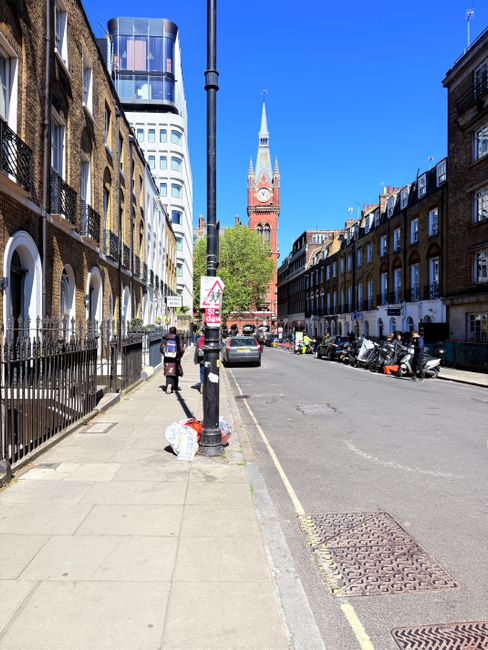
Kings Cross York Way rubbish removal guide
If you are dealing with a pile of junk, renovation debris, or old furniture on or near York Way, this Kings Cross York Way rubbish removal guide will help you make sense of the process without the usual stress. Maybe it is a flat that has filled up with boxes and broken bits over time. Maybe it is a shop, office, or rental property that needs clearing before handover. Or maybe you just want the stuff gone, properly and quickly, without tripping over it for another week.
The tricky part is that rubbish removal sounds simple until you actually need it. What can be taken? What needs separating? How do you avoid paying for wasted space? And who is responsible for making sure disposal is done properly? Let's walk through the practical side, with a local focus and a straightforward plan you can actually use.
Along the way, you will also see where related services can help, whether that is general waste removal support, a more specific house clearance, or a tailored job such as flat clearance. No fluff. Just the useful bits.
Contents
- Why Kings Cross York Way rubbish removal guide matters
- How the rubbish removal process works
- Key benefits and practical advantages
- Who this is for and when it makes sense
- Step-by-step guidance
- Expert tips for better results
- Common mistakes to avoid
- Tools, resources and recommendations
- Law, compliance, standards, or best practice
- Options, methods, or comparison table
- Case study or real-world example
- Practical checklist
- Conclusion
- Frequently asked questions
Why Kings Cross York Way rubbish removal guide Matters
York Way sits in a part of London where access, timing, and space all matter. That might sound obvious, but it changes how rubbish removal needs to be planned. A job that feels easy in a suburban driveway can become awkward if you are working in a busy street, a shared entrance, or a building with limited lift access. The difference between a smooth clear-out and a frustrating one is usually preparation.
It also matters because waste is not just waste. A sofa, bagged household rubbish, plasterboard, timber offcuts, garden cuttings, old appliances, and office paperwork all travel through different handling decisions. Some items can be reused, some should be recycled, and some need special care. If you mix everything together without thinking it through, the job becomes slower and often more expensive. Truth be told, that is where a lot of people lose time.
There is another reason this topic matters locally: King's Cross is a busy, well-connected area with a lot of flats, managed properties, and commercial spaces. That means rubbish removal is often tied to move-outs, refurbishments, office changes, storage clean-outs, and end-of-tenancy deadlines. When time is tight, you do not want guesswork.
Expert summary: The best rubbish removal jobs are the ones planned before anything is lifted. Sort the waste, identify access issues, choose the right disposal route, and confirm what will be removed. It saves time, avoids avoidable fees, and makes the whole process feel far less chaotic.
How Kings Cross York Way rubbish removal guide Works
Most rubbish removal follows the same basic pattern, even if the property type changes. First, you decide what needs to go. Then you identify whether the waste is mixed, bulky, recyclable, reusable, or potentially restricted. After that, you arrange the removal, agree the scope, and make sure access is clear on the day. Simple on paper. A bit less simple if the hallway is full of moving boxes and the lift is on the blink.
In practical terms, a good provider will usually assess the load, estimate the volume, and decide how best to collect it. Some jobs are quick and straightforward; others need a more careful approach, especially if there is furniture, builders' waste, or awkward access. For example, a small pile of bagged rubbish may be sorted in minutes, while a post-refurbishment clearance might need more structured handling. If your job includes heavy items, you may find the pages for furniture disposal or builders' waste clearance more relevant than a generic collection.
There is also the question of what happens after collection. Proper removal is not just about lifting and shifting. It is about sorting, transporting, and disposing of items responsibly. That might include recycling where possible, rehoming suitable items, and keeping hazardous or specialist materials separate from standard mixed waste.
For many people, the process feels easier once they understand the order of events:
- List what needs removing.
- Separate reusable items from true waste.
- Check access, parking, stairs, lifts, and loading space.
- Choose the most suitable clearance option.
- Arrange a time that suits the property and neighbours.
- Make sure the waste is taken away and handled correctly.
If you are clearing a whole property rather than just a few bags, a broader service such as home clearance or loft clearance may be a better fit. It is all about matching the method to the mess. That sounds cheeky, but it is true.
Key Benefits and Practical Advantages
The biggest benefit of organised rubbish removal is time. Not glamorous, but very real. When clutter starts spreading from one room to another, it begins to affect how you use the space. A hallway that is half full of unwanted items becomes annoying. A backyard stacked with broken furniture becomes a job you keep stepping around. Clearing it properly gives you the space back, and that tends to change how the whole place feels.
There is also a strong practical value in using a proper removal service rather than trying to do everything yourself. You avoid multiple trips, loading hassles, and the small but very tiring jobs that come with lifting heavy or awkward waste. In a place like York Way, where traffic and parking can be a pain, that saves more than just energy. It can save your entire afternoon.
Other benefits include:
- Better sorting: recyclable and reusable materials can be separated more easily.
- Safer handling: heavy, sharp, or dusty items are managed with care.
- Cleaner presentation: ideal before selling, letting, refurbishing, or reopening a space.
- Less disruption: a planned collection is usually far less messy than ad hoc dumping.
- Clearer budgeting: you are usually pricing a defined job rather than guessing as you go.
Another overlooked advantage is mental relief. When clutter hangs around, it becomes background noise. You stop noticing the room properly. Once it is cleared, even a small space can feel calmer. That may sound a bit poetic for rubbish removal, but honestly, you will notice it the moment the last bag is gone.
If sustainability matters to you, look for services that talk about reuse and recycling openly. The page on recycling and sustainability is worth exploring because disposal is not just about speed; it is about what happens next.
Who This Is For and When It Makes Sense
This guide is useful for a fairly wide range of people, and that is one reason the topic gets searched so often. Rubbish removal is not just for one-off big clearances. It is also for awkward little situations that somehow grow into a bigger mess. You know the type: one broken wardrobe, three surplus chairs, a few bags of clutter, and suddenly the spare room looks like a storage unit.
It makes sense if you are:
- moving out of a flat or maisonette near York Way
- preparing a rental property for new tenants
- clearing an office, studio, or workspace
- removing old furniture after redecorating
- dealing with garden waste or garage clutter
- tidying after small building works
- sorting through a loft, basement, or storage area
It also makes sense when time is short. A lot of people wait until the last minute, then realise there are stairs, parking restrictions, and more stuff than expected. If that is you, no judgement. It happens all the time. But it does mean the removal plan needs to be slightly smarter.
For businesses, the need is often different. Offices and shops tend to care about speed, data-sensitive disposal, and keeping disruption low. In those cases, office clearance or business waste removal may be the more suitable route.
Step-by-Step Guidance
Here is the cleanest way to approach rubbish removal around York Way. It is not complicated, but doing it in the right order saves you from surprises.
1. Walk the space and identify everything
Start with a proper look, not a quick glance. Go room by room, or area by area, and note what is actually going. A bag in the corner may contain mixed waste. A chair may be reusable. A pile of timber may be cleaner builders' waste rather than household rubbish. Small distinctions matter because they affect sorting and cost.
2. Separate useful items from waste
If something can be reused, donated, repaired, or resold, it is often worth keeping it out of the rubbish pile. Even if you do not have time to deal with that yourself, separating the obvious reuse items up front helps the crew work faster. Furniture, for instance, often benefits from being grouped separately, and furniture clearance can be more efficient when the items are already visible and accessible.
3. Check access before collection day
This is the bit people skip, then regret. Ask yourself: where will the vehicle stop? Is there a lift? Are there narrow stairs? Is the entrance shared? Can items be carried safely without blocking neighbours? In London, access is often the real issue, not the volume of waste itself. If the route from the property to the vehicle is awkward, a collection takes longer than you expect.
4. Decide whether you need a general or specialist service
Not every job is the same. A simple household clear-out can be handled quite differently from a garage, loft, garden, or post-build clearance. If you are dealing with a specific area, look at the most relevant option. A garage clearance is not the same as a garden clearance, and a builder's rubble pile is not the same as a stack of old wardrobes. Obvious, perhaps, but worth saying.
5. Confirm what is excluded
Some items may need special handling or may not be accepted in a standard load. This is where you should be direct and ask questions early. Hazardous materials, sharp waste, liquids, and certain electrical or contaminated items may follow different rules. Better to ask than assume.
6. Prepare the area for a smooth pickup
On the day, keep walkways clear, separate items into logical groups if requested, and make sure the collection point is easy to reach. If you can, free up the lift or stair route. A small bit of prep goes a long way. Really, it does.
Expert Tips for Better Results
After plenty of clearances, a few habits stand out. They do not sound dramatic, but they make a job smoother every single time.
- Photograph the waste before booking: a few clear photos help everyone understand the scope.
- Group by type: furniture, mixed rubbish, and building waste should not be thrown together unless the service says it is fine.
- Keep a "maybe" pile separate: if you are unsure about keeping or removing an item, do not let it disappear into the waste pile by accident.
- Think about neighbours and shared areas: especially in flats, where noise and hallway blockages matter.
- Ask about recycling routes: the more you know about reuse and sorting, the better the outcome tends to be.
A useful local tip: in dense streets like those around King's Cross, it helps to plan around delivery windows, building management rules, and the times when access is easiest. Early morning can work well, but not if it clashes with building restrictions or creates unnecessary noise. Balance matters.
And if the job is emotionally loaded, such as clearing a family home, go a little slower. It is tempting to treat everything as rubbish. Sometimes it is not. Take the time to check drawers, envelopes, and storage boxes before anything leaves the property.
Common Mistakes to Avoid
The most common mistake is underestimating the amount of waste. People often think they have "a few bits", then discover several bags, broken furniture, packaging, and forgotten items hiding in cupboards. That is usually when stress sets in. The fix is simple: inspect the property properly before booking.
Another mistake is mixing all waste together without thinking about type. This can make sorting harder and may reduce the chance of recycling certain materials. It is especially noticeable with builder's waste, which often includes different materials that should not all be treated the same way.
Other mistakes worth avoiding:
- blocking access with items that should already be outside or grouped
- forgetting to check parking or loading arrangements
- assuming every service handles every item
- leaving paperwork, keys, or valuables inside stored furniture
- booking too late before a move-out or deadline
One small but important point: do not leave everything until the morning of collection if you can help it. It always feels manageable the night before. Then morning arrives, and suddenly the pile is bigger and the kettle is on and the day has got away from you.
Tools, Resources and Recommendations
You do not need specialist equipment to organise a rubbish removal well, but a few basic tools make the job much easier.
- Heavy-duty bags or boxes: useful for loose rubbish and smaller items.
- Labels or tape: handy if you want to mark keep, donate, recycle, or remove.
- Gloves: especially if you are sorting dusty, sharp, or awkward items.
- Measuring tape: useful for checking whether bulky furniture will fit through doors or down stairs.
- Phone camera: the simplest way to record the scope of the job.
For service planning, the most useful resources on this site are the ones that help you understand scope, safety, and pricing. If you want to compare broader service types, have a look at pricing and quotes, insurance and safety, and health and safety policy. They are not flashy pages, but they do matter when you want reassurance before booking.
If your waste is mostly furnishings, the difference between furniture clearance and furniture disposal is worth understanding. The first is usually about clearing multiple items or a larger volume. The second is more specific to getting unwanted furniture removed and handled properly.
Law, Compliance, Standards, or Best Practice
Waste removal in the UK comes with responsibilities, even when the job seems small. You do not need to become a legal expert to make a sensible decision, but you should understand the basics. The main point is straightforward: waste should be handled by a responsible operator, and it should end up somewhere appropriate for its type.
Best practice usually includes clear identification of the waste, safe lifting, careful loading, and proper disposal routes. If a service says it can take everything, that is not automatically a problem, but it should still be able to explain how different waste streams are managed. Reuse, recycling, and safe disposal are all part of the picture.
For landlords, letting agents, and business owners, documentation and consistency matter too. If you are clearing a property before a handover, it helps to keep a record of what was removed, when, and by whom. Not because you expect drama, but because it keeps things tidy and avoids confusion later.
There are also practical safety considerations. Broken glass, nails, sharp timber, heavy appliances, and awkward stair carries can all lead to injuries if they are rushed. A good approach is to treat the job like a small moving operation rather than a bin-emptying exercise. That mindset alone usually improves results.
Where sustainability is concerned, try to separate items that can be recycled or reused. And if you are clearing out a larger home, office, or mixed-use property, the right service often depends on the type of waste involved rather than just the address. That is where a bit of judgement helps.
Options, Methods, or Comparison Table
There are a few ways to deal with rubbish around York Way, and the best choice depends on time, volume, and the type of waste involved.
| Method | Best for | Advantages | Drawbacks |
|---|---|---|---|
| DIY disposal | Very small loads, simple bagged waste | Low direct cost, immediate control | Time-consuming, lifting, parking, multiple trips |
| Skip hire | Longer projects, ongoing building work | Good for gradual filling, suitable for larger volumes | Space needs, permit considerations, self-loading required |
| Professional rubbish removal | Mixed waste, bulky items, time-sensitive clearances | Fast, convenient, safer for heavy items | Usually higher upfront cost than doing it yourself |
In many King's Cross situations, professional removal wins on convenience alone. If you are clearing a flat, handling bulky furniture, or working to a move-out deadline, that door-to-door service can be the difference between an orderly day and a frazzled one. If the waste is mostly renovation debris, builders' waste clearance may be the best-fit option instead of a general collection.
For larger domestic jobs, house clearance is often the cleaner option. For smaller, more focused jobs, a simple waste removal service may be all you need.
Case Study or Real-World Example
Here is a realistic example. A resident near York Way is moving out of a two-bedroom flat and has accumulated a bit of everything: a worn sofa, a damaged desk, several black bags of clutter, some packaging from a recent purchase, and a few items left in the hallway storage area. The deadline is tight, the lift is small, and there is no appetite for half a day of lifting and hired vans.
The most sensible approach is to group the sofa and desk separately from the bagged waste, check building access, and confirm whether any items should be treated as furniture rather than general rubbish. If the wardrobe is still usable, it might be worth removing it as a reusable item rather than sending it straight to disposal. That single choice can change the pace of the job quite a lot.
On the day, the crew arrives with the right equipment, avoids the narrowest route where possible, and removes items in a practical order: bulky furniture first, then bags, then the smaller leftover pieces. What looked like a messy all-day job turns into a controlled clearance because the sorting was done before anyone touched a thing.
That is the real lesson here. Most rubbish removal problems are actually planning problems. Once the planning is clear, the work becomes much easier.
Practical Checklist
Use this quick checklist before you book or begin a rubbish removal job near York Way:
- List every item or waste type that needs removing.
- Separate furniture, mixed rubbish, and builders' waste.
- Check for anything reusable or worth keeping.
- Measure bulky items and confirm door, stair, and lift access.
- Confirm parking or loading arrangements if needed.
- Identify any items that may need special handling.
- Take a few photos for reference.
- Decide whether you need a flat, house, garage, loft, or office clearance.
- Choose a collection time that reduces disruption.
- Leave the access route as clear as possible.
Quick takeaway: if the waste is mixed, bulky, or time-sensitive, do not overcomplicate it. A good removal plan is simply one that fits the property, the waste type, and the deadline.
Conclusion
A smart Kings Cross York Way rubbish removal guide is really about making the job manageable. You do not need to know every disposal rule by heart. You just need a clear view of what is being removed, how access works, and which service fits the waste in front of you. Once those pieces are in place, the whole process becomes far less stressful.
Whether you are clearing a flat, stripping out an office, dealing with builders' waste, or simply reclaiming a cluttered room, the same principle applies: sort first, remove second, and keep disposal responsible. That way, you get the space back without creating a new headache.
If you are still weighing up the right option, a quick look at the relevant service pages can help you decide what fits best, especially for specialised jobs like office clearance, garage clearance, or home clearance. And if you want to understand the company behind the service, the about us page is a sensible place to start.
Get a free quote today and see how much you can save.
Frequently Asked Questions
What does rubbish removal around York Way usually include?
It usually includes the collection and disposal of general household waste, bulky items, furniture, and sometimes specialist loads such as builders' waste, depending on the service. The exact scope should always be confirmed before booking.
Is rubbish removal better than hiring a skip?
It depends on the job. If you have a small, straightforward load and you are happy to do the lifting, a skip may work. If the waste is bulky, mixed, or you want minimal disruption, a removal service is often easier.
Can old furniture be taken away during rubbish removal?
Yes, in many cases. Furniture is often handled through furniture clearance or furniture disposal rather than treated as standard bagged waste. It helps to separate it in advance.
How do I prepare a flat near York Way for waste collection?
Group items by type, clear access routes, check lift and stair access, and make sure the items to be removed are easy to identify. In a flat, access planning matters more than people think.
What if I have builders' waste as well as household rubbish?
That is common after refurbishments. It is best to mention it early because builders' waste may need a different handling approach from mixed domestic rubbish.
Do I need to sort recyclable items myself?
Not always, but it helps if you can separate obvious recyclable or reusable items. Even a rough sort can improve efficiency and reduce waste that is thrown together unnecessarily.
How far in advance should I book rubbish removal?
As early as you can, especially if you are working to a move-out date or business deadline. Last-minute bookings are sometimes possible, but they give you less room to plan access and sorting.
Is rubbish removal suitable for offices and business premises?
Yes. Office clearance and business waste removal are commonly used for workspaces, retail units, and shared commercial areas where speed and minimal disruption matter.
What should I do with items I might want to keep?
Move them away from the clearance area before the job begins. If you are unsure, make a separate "keep" pile. It sounds obvious, but it prevents a lot of mistakes.
Are there safety issues with rubbish removal?
There can be. Heavy lifting, sharp edges, broken items, dusty lofts, and awkward stairs all carry risk. Good practice means using the right equipment and not rushing the carry.
Can I ask about insurance and safety before booking?
Yes, and you should. A responsible provider should be able to discuss how safety is handled. The site pages on insurance and safety and health and safety policy are useful for understanding that side of the service.
What is the best option for a whole-property clear-out?
If you are clearing an entire home, loft, or multiple rooms at once, a broader service such as house clearance or home clearance is usually the most practical choice. It is cleaner than trying to piece the job together one item at a time.
How can I keep the process affordable?
Sort waste before collection, remove items you want to keep, and choose the right type of service rather than the most general one. Clear information up front usually leads to a smoother quote and fewer surprises later.